Social interaction plays a defining role in how people engage with both physical and digital activities. In parkour culture, progress is rarely an isolated process. Practitioners train together, exchange feedback, and encourage responsible skill development. The environment is collaborative, supportive, and built on shared improvement.
Similarly, social casino platforms are structured around interaction. Participants connect through multiplayer formats, shared challenges, community rankings, and communication features that create a sense of collective involvement. The experience is shaped not only by individual participation but also by awareness of others engaging within the same system.
Understanding how social structures influence motivation, consistency, and long-term engagement helps connect these two seemingly different worlds. Both environments rely on community presence to sustain interest and reinforce positive behavioral patterns.
- Interaction encourages consistency and long-term engagement
- Shared experiences increase motivation
- Peer observation accelerates learning processes
- Structured social systems create accountability
- Community recognition reinforces participation
These elements form the foundation of how both parkour practitioners and social casino participants interact with structured environments.
Community as a Core Component of Participation
Social Learning in Physical and Digital Environments
Parkour communities are built around shared exploration and skill development. Training sessions often take place in groups where experienced practitioners guide beginners through movement techniques. This exchange of knowledge creates an informal learning structure where feedback is immediate and practical.
Social casino platforms incorporate similar dynamics through digital interaction systems. Leaderboards, shared achievements, and cooperative features allow participants to observe performance patterns and adapt their approach accordingly. Even without physical presence, the awareness of others participating influences behavior.
The key similarity lies in how individuals respond to community visibility. Participation becomes more structured when individuals feel part of a system where actions are noticed and outcomes are shared.
Motivation Through Collective Engagement
Group training environments in parkour create a sense of accountability. Participants are more likely to attend training sessions consistently when others expect their presence. The same principle applies to digital environments where shared events and ongoing activities encourage repeated interaction.
Collective engagement introduces stability into participation patterns. Individuals return not only for the activity itself but also for the social framework surrounding it.
Communication Structures and Feedback Mechanisms
Real-Time and Asynchronous Interaction
Communication plays a central role in shaping both parkour culture and social casino participation. In physical training environments, feedback is often immediate. Practitioners observe movement execution, suggest adjustments, and discuss safer approaches to obstacles.
In digital environments, communication may occur through chat functions, notifications, or performance comparisons. Participants receive feedback through structured indicators such as ranking changes or achievement updates.
Both environments rely on systems that provide information allowing participants to adjust behavior.
Types of Interaction Within Structured Systems
The following forms of interaction are commonly observed in both environments:
- Observational learning through watching others perform
- Feedback exchange that improves performance quality
- Shared participation in structured challenges
- Recognition systems that reinforce continued involvement
- Communication tools that facilitate collaboration
Interaction systems influence how individuals interpret progress and identify areas for improvement.
Comparison of Social Interaction Elements
| Aspect | Parkour Culture | Social Casino Platforms |
| Learning environment | Group-based skill practice | Shared digital participation |
| Feedback method | Direct verbal and visual feedback | System-generated performance indicators |
| Community structure | Informal training groups | Platform-based participant networks |
| Motivation drivers | Peer encouragement | Shared achievements and rankings |
| Interaction frequency | Scheduled group sessions | Continuous online accessibility |
| Visibility of progress | Observable skill development | Structured progress indicators |
Both environments rely on visibility of participation to sustain interest and encourage repeated involvement.
Influence of Shared Goals on Engagement
Alignment of Individual and Collective Objectives
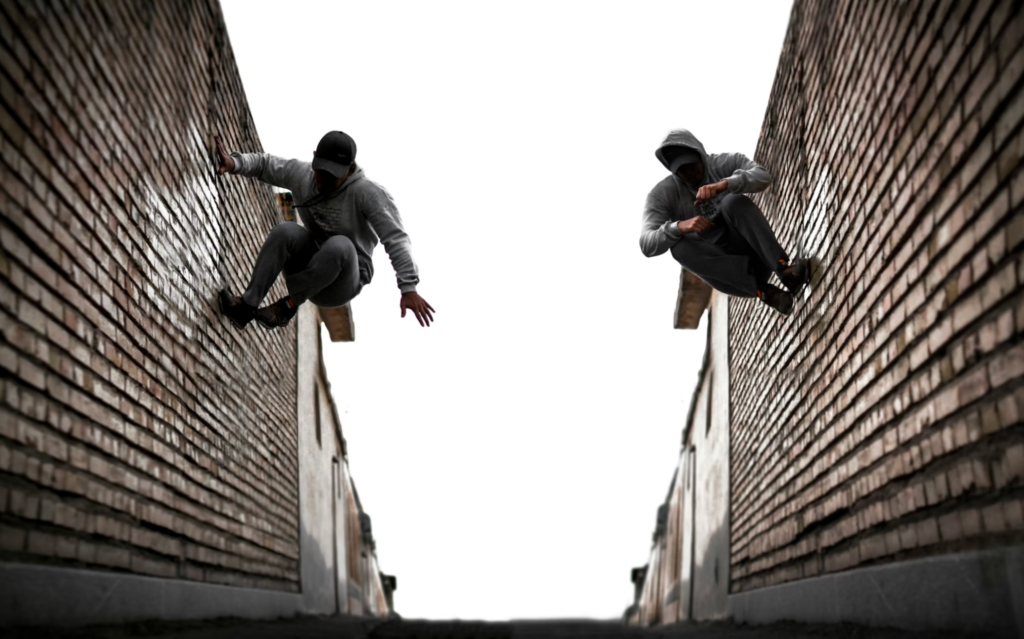
Parkour communities often develop shared training goals. Participants may focus on improving balance, mastering specific vaults, or refining movement efficiency. While progress is individual, the process is supported collectively.
Social casino environments frequently include shared milestones such as participation events or cooperative achievements. Individuals engage independently but contribute to a broader participation ecosystem.
Shared goals create structure within which individuals operate. Participation becomes more meaningful when outcomes are connected to a broader system rather than isolated effort.
Adaptation Through Social Observation
Participants in both environments adjust their behavior based on observing others. In parkour, observing technique variations can introduce more efficient movement strategies. In digital environments, observing outcome patterns may influence decision-making approaches.
Social observation accelerates adaptation by providing additional reference points beyond individual trial and error.
Trust and Behavioral Consistency
Predictability in Social Systems
Trust plays an important role in both parkour culture and digital participation platforms. Practitioners rely on training partners to provide constructive feedback and maintain safe practice environments. Consistency in communication reinforces reliability within the community.
Social casino platforms depend on structured systems that provide predictable interaction frameworks. Participants understand how progress indicators work and how achievements are distributed. Predictability increases comfort and encourages continued involvement.
Consistency within social systems contributes to stable participation patterns.
The Role of Digital Connectivity in Expanding Communities
Access to Global Interaction Networks
Parkour communities have expanded through digital communication channels. Practitioners share training videos, discuss techniques, and exchange location insights across geographic boundaries.
Social casino environments are inherently digital, enabling participants from multiple regions to interact within the same structured system. Connectivity allows interaction patterns to extend beyond local environments.
Global connectivity increases diversity of participation styles and introduces broader learning opportunities.
Community Continuity Beyond Physical Presence
Digital interaction allows participation continuity even when physical training sessions are not possible. Practitioners remain connected through discussion channels and shared content.
Similarly, social casino platforms maintain engagement through continuous accessibility. Interaction is not limited by time or location constraints.
Continuity strengthens long-term participation habits.
Conclusion: Shared Social Structures Across Different Contexts
Parkour culture and social casino platforms demonstrate that social interaction is a central component of sustained engagement. Whether in a physical training environment or a digital participation system, individuals respond to shared experiences, structured feedback, and visible progress indicators.
Both environments emphasize learning through observation, communication, and collective participation. Social structures influence motivation, guide improvement, and create continuity in participation patterns.
Understanding these similarities allows readers interested in parkour to recognize familiar participation dynamics within digital environments. Social interaction shapes how individuals interpret progress, maintain interest, and remain engaged over time.