Two Different Worlds with Shared Principles
At first glance, parkour and the social casino experience seem unrelated. Parkour is a physical discipline rooted in movement efficiency, adaptability, and urban exploration. Social casino platforms, on the other hand, operate in the digital space, offering entertainment through game mechanics inspired by traditional casino formats but without real-money gambling requirements.
However, when examined more closely, both environments rely on similar psychological processes, behavioral patterns, and motivational structures. Participants in both activities continuously assess risk, make quick decisions, refine strategies, and pursue measurable progress. Understanding these shared foundations allows parkour-focused audiences to explore the social casino experience through a familiar lens.
Both activities also emphasize engagement, persistence, and the development of skill over time. Whether navigating an urban obstacle or participating in a structured digital game environment, individuals interact with systems that reward learning, consistency, and informed decision-making.
- Both activities require evaluation of risk before action
- Participants learn through repetition and gradual improvement
- Structured challenges create motivation to progress
- Feedback systems influence future decisions
- Community interaction enhances long-term engagement
These parallels create an opportunity to present social casino experiences in a way that aligns with the mindset of readers interested in parkour culture.
Risk and Reward Systems
Decision-Making Under Uncertainty
Parkour athletes regularly make decisions involving physical risk. They evaluate surfaces, distances, environmental conditions, and personal readiness before performing movements. Every action requires an understanding of consequences and probability.
Similarly, social casino platforms incorporate decision-based gameplay where participants choose how to engage with available options, manage virtual resources, and adapt to outcomes. The core similarity lies in the decision-making process rather than the context in which it occurs.
Both activities involve calculated participation rather than random action. Success depends on awareness, preparation, and continuous adjustment.
Feedback Loops and Learning Patterns
In parkour training, feedback comes from physical performance. Athletes adjust technique based on results, refining precision and improving efficiency. Mistakes provide information that supports skill development.
Social casino environments also rely on feedback loops. Participants receive immediate responses to decisions, allowing them to observe patterns and refine strategies within the entertainment framework. The learning process is iterative in both cases.
Skill Development Through Structured Progression
Incremental Improvement and Mastery
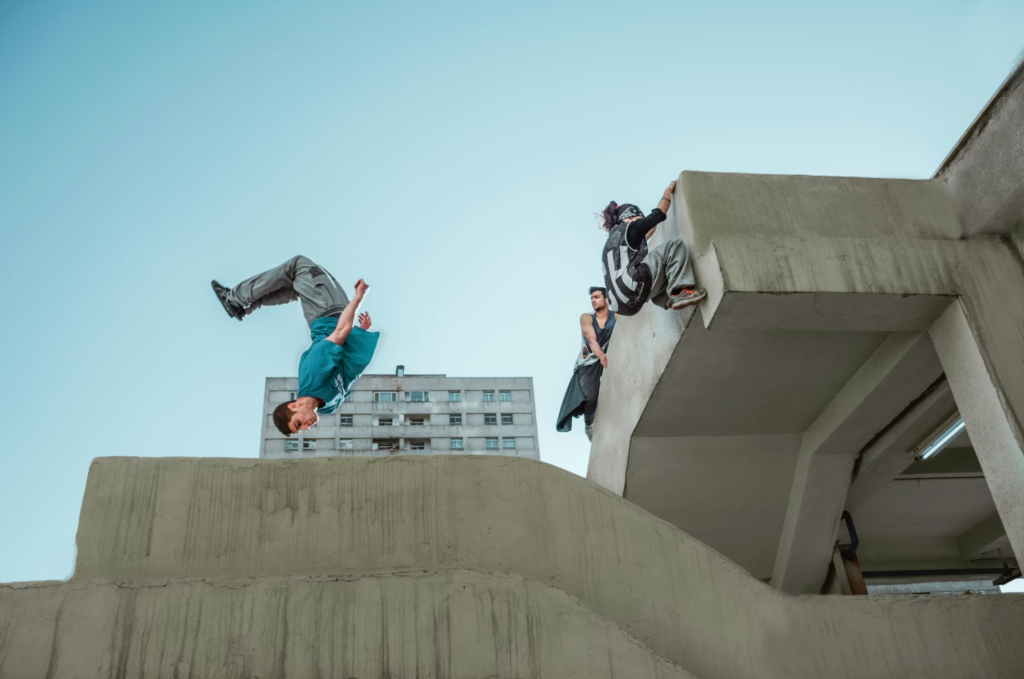
Parkour emphasizes gradual skill development. Beginners start with foundational movements such as vaults and balance exercises before progressing to more complex sequences. Structured progression reduces unnecessary risk and promotes sustainable improvement.
Social casino experiences frequently include level systems, achievement milestones, and reward structures designed to encourage continued participation. These systems create a sense of progression similar to skill acquisition in physical disciplines.
Comparison of Progression Elements
| Element | Parkour Training | Social Casino Experience |
| Learning curve | Movement techniques improve over time | Gameplay familiarity increases gradually |
| Feedback type | Physical performance results | Digital performance indicators |
| Progress tracking | Skill consistency and movement complexity | Levels, rewards, and achievements |
| Motivation factor | Personal development and mastery | Interactive entertainment progression |
| Adaptation | Technique adjustment based on environment | Strategy adjustment based on outcomes |
Both environments rely on structured progression systems that encourage participants to remain engaged over time.
The Importance of Community Interaction
Social Learning Environments
Parkour communities play a central role in the development of practitioners. Athletes often train together, share techniques, provide feedback, and encourage responsible progression. Learning from others accelerates improvement and helps maintain safety standards.
Social casino platforms incorporate community features such as leaderboards, shared achievements, and interactive participation elements. While the environment differs, the social dimension contributes to engagement and continued interest.
Participants benefit from observing how others approach challenges, whether physical or digital.
Shared Motivation Through Collective Participation
Community presence increases commitment. In parkour, training partners provide encouragement and accountability. In social casino environments, shared experiences can increase enjoyment and create a sense of belonging.
Both environments demonstrate that participation is often influenced by social interaction rather than individual motivation alone.
Psychological Engagement and Focus
Attention and Situational Awareness
Parkour requires strong situational awareness. Athletes must remain attentive to surroundings, body positioning, and timing. Focus directly influences performance quality and safety.
Social casino participation also relies on attention and pattern recognition. Players observe game structures, track outcomes, and make decisions accordingly. Engagement requires concentration rather than passive interaction.
Behavioral Drivers of Engagement
The following elements influence continued participation in both environments:
- Clear objectives encourage structured involvement
- Immediate feedback maintains attention
- Defined systems create predictable learning paths
- Adaptive challenges sustain interest
- Measurable progress reinforces motivation
These factors contribute to long-term engagement regardless of whether the activity is physical or digital.
Responsible Participation and Control
Parkour culture emphasizes responsible progression. Athletes are encouraged to understand personal limits, prioritize safety, and avoid unnecessary risk. Skill development is approached methodically.
Similarly, social casino environments promote controlled participation focused on entertainment value. Awareness of time spent and engagement level contributes to a balanced experience.
Responsible involvement is essential in both contexts. Participants benefit from maintaining awareness of personal boundaries and ensuring that activities remain aligned with individual goals.
Maintaining Sustainable Engagement
Long-term participation in any structured activity depends on balance. Overexertion in physical training can increase injury risk, while excessive digital engagement can reduce enjoyment.
Establishing clear boundaries ensures that participation remains constructive and positive.
Conclusion: Shared Structures Behind Different Activities
Although parkour and the social casino experience exist in different environments, both rely on similar engagement principles. Decision-making, structured progression, community interaction, and feedback-driven improvement are central to both activities.
Understanding these shared characteristics allows readers interested in parkour to view social casino platforms through a familiar framework. The connection is not metaphorical but structural, rooted in behavioral patterns and motivational design.
Both activities demonstrate how individuals interact with systems that reward consistency, learning, and thoughtful participation. Recognizing these similarities provides valuable context when introducing social casino experiences to audiences already familiar with performance-oriented disciplines.